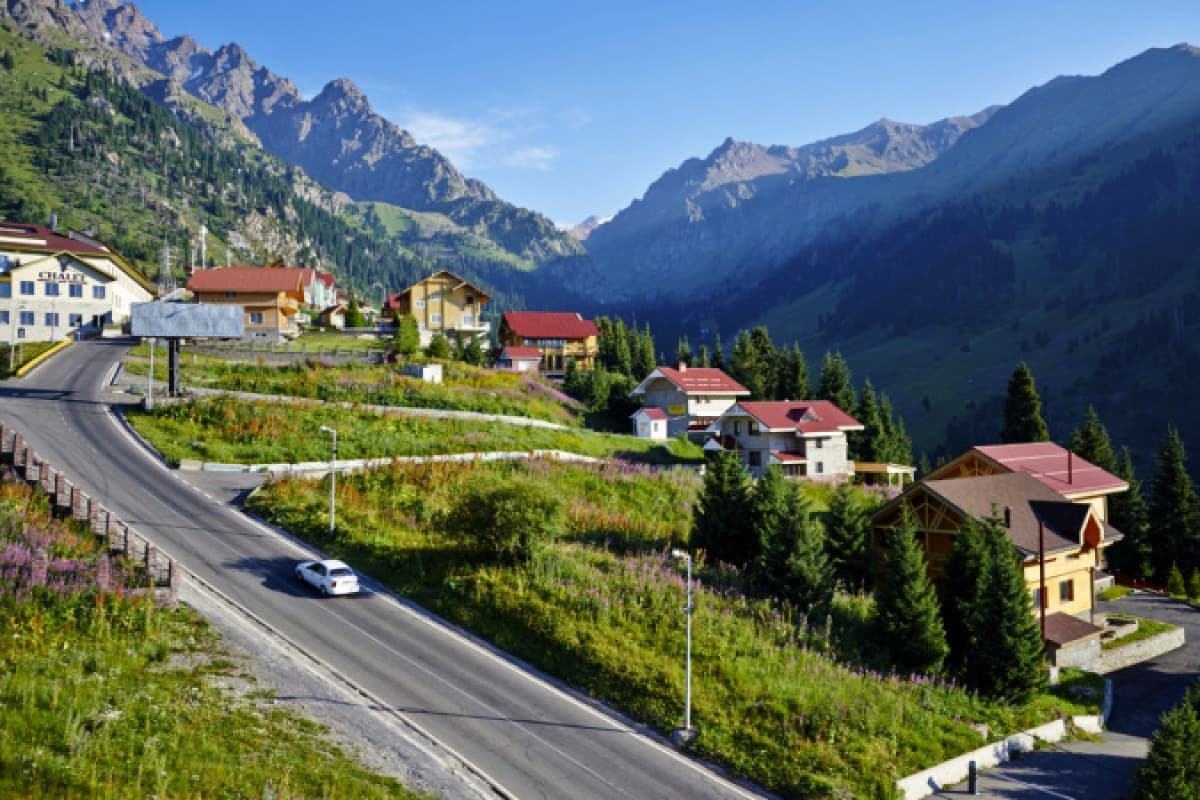
Kazakhstan is the country where scale and contrast become the main travel experience. It is not only about one ski area or one backcountry zone. It is about moving between a major city, broad steppe-like space, and mountain terrain that can feel unexpectedly serious once the trip leaves the urban edge behind. That combination gives Kazakhstan a different personality from Kyrgyzstan. It feels less village-driven and more infrastructurally split between gateway-city convenience and deeper mountain travel.
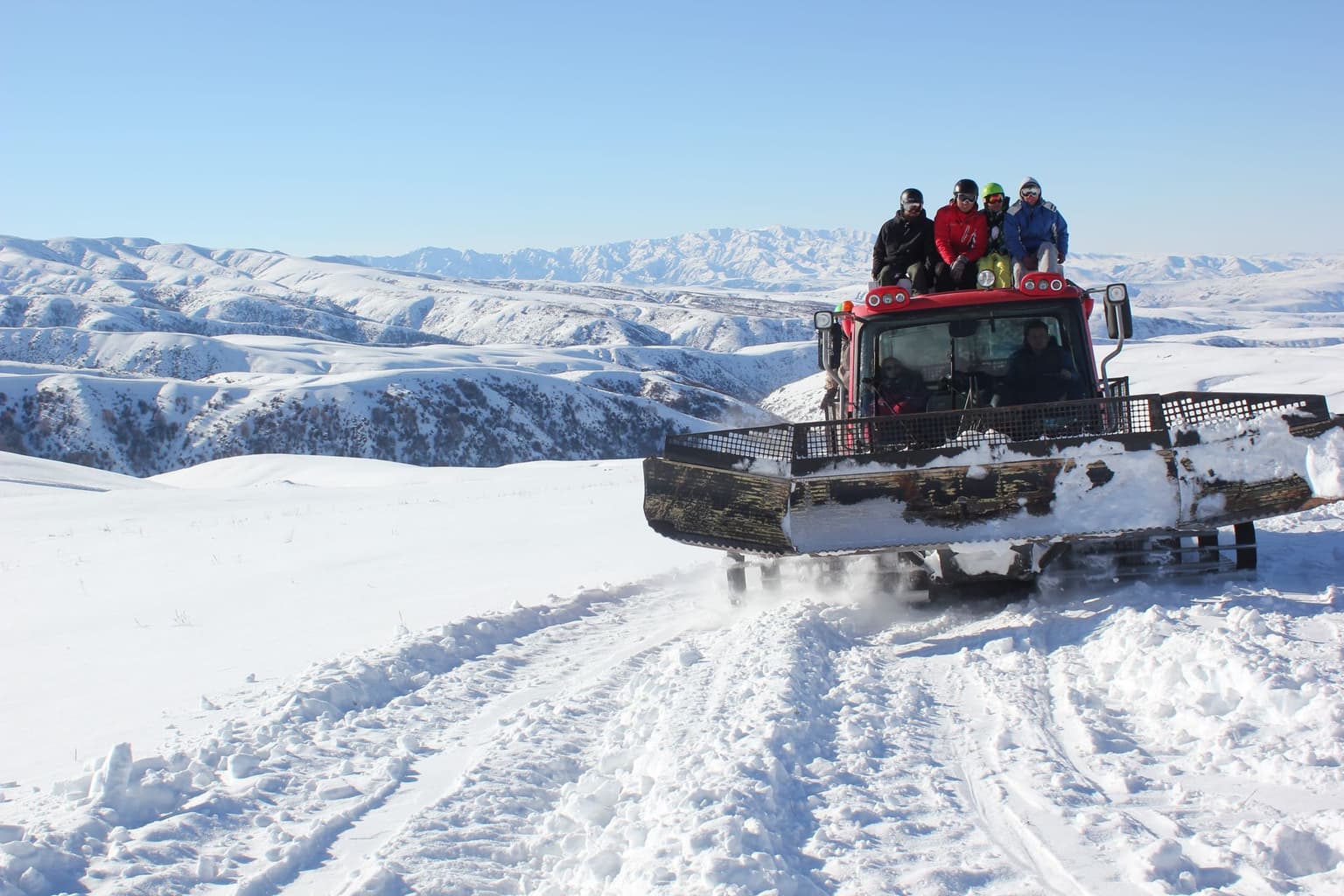
That split is what gives the destination its route logic. Shymbulak is the most practical entry point: a recognizable resort above Almaty with lift-served terrain, city access, and enough structure for shorter freeride-oriented stays. Karkara then shifts the country into a more remote product with snowcat or helicopter framing and a stronger expedition feel. Taken together, those places make Kazakhstan useful for trips that want both convenience and remoteness instead of choosing only one. The country works best when it is treated as a contrast destination rather than a single-format mountain week.
Trip-style differentiation matters here. Resort-led travel works around Shymbulak, where city proximity and lift access make the destination efficient and comparatively easy to understand. Touring and exploratory formats become more interesting as the trip expands into larger mountain systems or more isolated terrain. Catski and heli-oriented products are where Kazakhstan starts to separate itself, especially for riders who want open alpine space and less crowded snow access. Because the country is so large, it also suits longer-form itineraries where movement itself is part of the appeal instead of an inconvenience to be minimized.
Kazakhstan is strongest for riders who want broad landscape feeling, a real urban gateway, and the ability to transition between structured and remote mountain formats. It suits people who want to combine resort access with a larger sense of Central Asian geography. It is less ideal for guests looking for highly social village atmosphere, tightly linked multi-stop resort travel, or a trip that is mostly about one compact mountain base with very little internal movement.
Seasonality should be framed through use case. Midwinter is the easiest answer for the broader destination, but the most appropriate timing depends on whether the trip is focused on Shymbulak convenience, backcountry access, or weather-sensitive mechanized products. As in the rest of Central Asia, mountain access and route quality matter more than simple calendar marketing. The destination rewards travelers who leave room for logistics, weather shifts, and the very real differences between urban access and deeper terrain days.
Within the wider Silk Road Freeride map, Kazakhstan adds a useful bridge between city-linked mountain travel and frontier-scale backcountry potential. It does not feel as raw as Kyrgyzstan or as passage-driven as China, but it gives the corridor a strong urban-to-mountain contrast and a larger Eurasian sense of space. That is what makes it distinct.